Pre-Emergent Crabgrass Control: Timing and Products That Work in the Southeast
Why Pre-Emergent Timing Is Everything
Pre-emergent herbicides don't kill crabgrass — they prevent seeds from germinating by creating a chemical barrier in the soil. This means they must be applied before crabgrass seeds germinate, which occurs when soil temperatures reach 55°F at a 2-inch depth for several consecutive days. In Georgia, this typically happens in late February to mid-March. In Tennessee and South Carolina, the window is usually early-to-mid March. Applications made after germination has begun will not prevent the existing crop of crabgrass — you'll need a post-emergent product at that point.
How to Time Pre-Emergent in Georgia, Tennessee, and South Carolina
The most reliable indicator for pre-emergent timing in the Southeast is the forsythia bloom rule — apply pre-emergent when forsythia shrubs are in full bloom, which coincides closely with soil temperature warming into the germination range. Turf Masters monitors soil temperatures throughout our service areas in Georgia, Tennessee, and South Carolina and applies pre-emergent at precisely the right moment — not on a calendar date that may be too early or too late depending on the year's weather patterns.
Pre-Emergent Products That Work for Fescue and Bermuda Lawns
The choice of pre-emergent product matters for transition zone lawns that mix warm and cool-season grasses. Prodiamine (the active ingredient in Barricade) and pendimethalin (Pendulum) are both excellent and safe for established fescue, bermuda, and zoysia. Dithiopyr (Dimension) offers the added benefit of limited early post-emergent activity against young crabgrass seedlings, providing a slightly larger application window. Note: pre-emergent herbicides will also prevent overseeded grass seed from germinating — do not apply in fall within 8-10 weeks of planned overseeding.
Does Pre-Emergent Need a Second Application?
In Georgia's long growing season, a single pre-emergent application in late February or early March often loses effectiveness by June or July, allowing late-season crabgrass germination. Turf Masters recommends a split application — a full-rate initial application in late February and a reduced second application 6-8 weeks later — for superior season-long control. This is particularly important for lawns with heavy crabgrass seed banks from previous years of infested turf.
What to Do If You Missed the Pre-Emergent Window
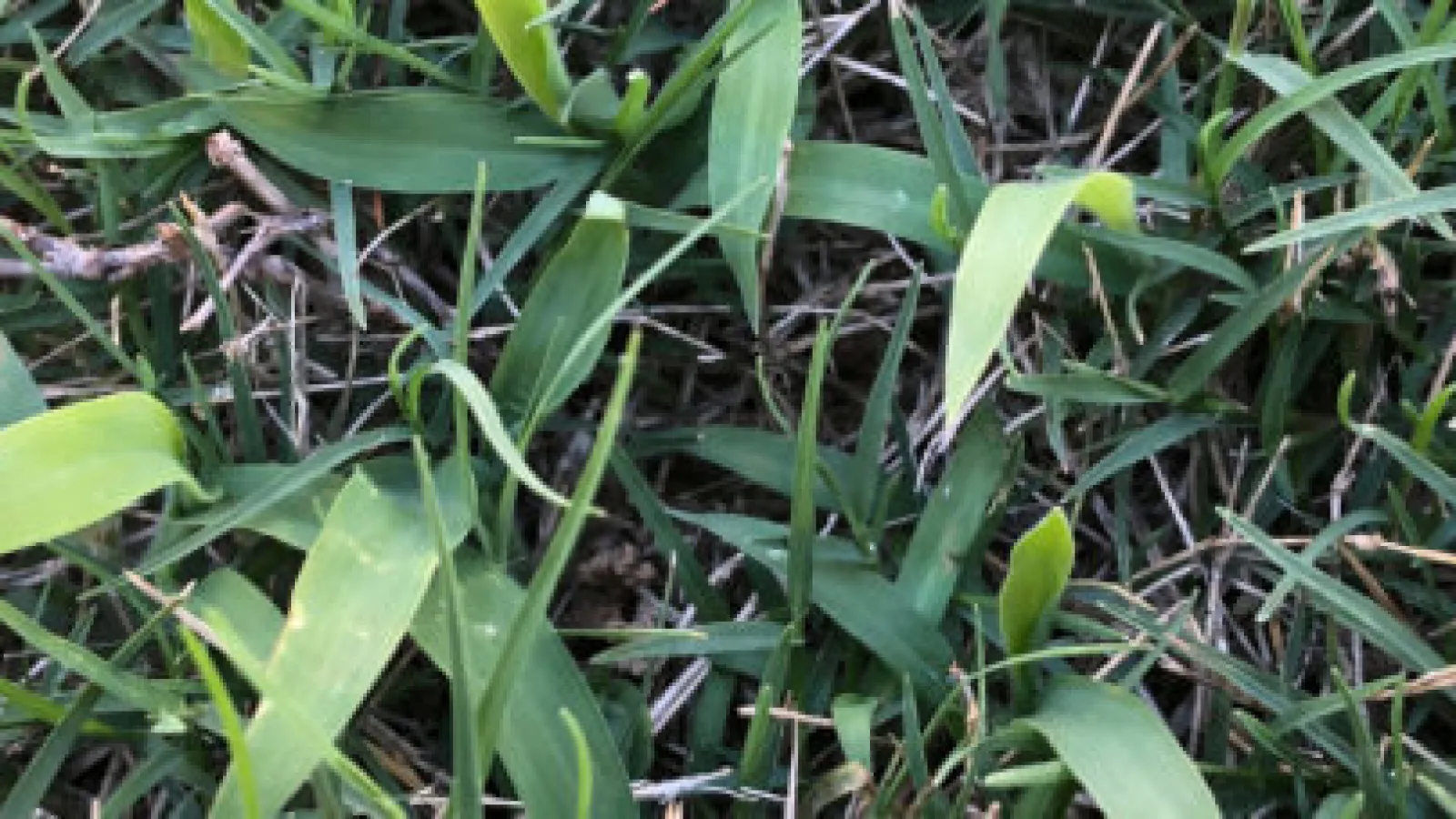
If crabgrass is already actively growing in your lawn, post-emergent options include quinclorac (Drive XLR8) and fenoxaprop (Acclaim Extra), both of which provide selective control of young crabgrass in fescue and most warm-season lawns. These are most effective on young plants with 1-3 tillers — large, mature crabgrass is significantly harder to control. The best strategy for a heavy infestation is to accept the crabgrass for the season, commit to heavy fall overseeding to crowd it out, and implement a two-application pre-emergent program the following spring.
How Pre-Emergent Fits Into a Complete Lawn Care Program
Pre-emergent crabgrass control is one piece of a complete annual lawn care program. Turf Masters' spring applications integrate pre-emergent with your lawn's fertilization schedule — applying nutrients and weed prevention in a single, optimally timed visit. A thick, healthy fescue or bermuda lawn also provides natural crabgrass suppression; a dense turf canopy blocks sunlight that crabgrass seeds require to germinate, reducing reliance on chemical control over time.
Frequently Asked Questions
- When should pre-emergent be applied in Georgia? In Georgia, pre-emergent should be applied in late February to mid-March, when soil temperatures approach 55°F. Monitor forsythia bloom as a practical timing indicator.
- Can I apply pre-emergent to my fescue lawn? Yes — prodiamine, pendimethalin, and dithiopyr are all safe for established tall fescue. Do not apply pre-emergent within 8-10 weeks of planned overseeding, as it will prevent grass seed germination.
- What pre-emergent does Turf Masters use? Turf Masters uses professional-grade pre-emergent products selected for each lawn's grass type and regional timing conditions. Products are applied at rates that provide effective control without risk to desirable turf.
- Does pre-emergent also control broadleaf weeds? Most pre-emergent products are designed for grassy weed prevention and do not effectively control broadleaf weeds. Broadleaf weed control typically requires post-emergent applications during active growth.
- What if pre-emergent didn't work on my crabgrass? If pre-emergent failed, timing was likely off or the application window was missed. Post-emergent options like quinclorac work on young plants. Contact Turf Masters for an assessment and a treatment plan.
Don't let another season go by fighting crabgrass after it's already taken over. Turf Masters' pre-emergent program is timed precisely for Georgia, Tennessee, and South Carolina conditions — get ahead of it this year. Get a free quote today.